
Jobs Search
AI and Your Job Search: Use It Smartly, Don’t Let It Cost You the Job
Let’s be honest. If you’re looking for a new role right now, you’ve probably used AI at some point.
Maybe you’ve used it to improve your CV, prepare for interviews, research companies or even help write a LinkedIn message. And that’s absolutely fine.
Used properly, AI can be one of the most useful tools in your job search. It can save time, boost your confidence and help you present yourself more effectively.
The key is remembering that AI should help you tell your story, not tell it for you.
Use AI to Work Smarter
Searching for a new job can feel like a full-time job in itself. Between updating your CV, researching employers, preparing for interviews and submitting applications, there’s a lot to fit into an already busy life.
That’s where AI can help.
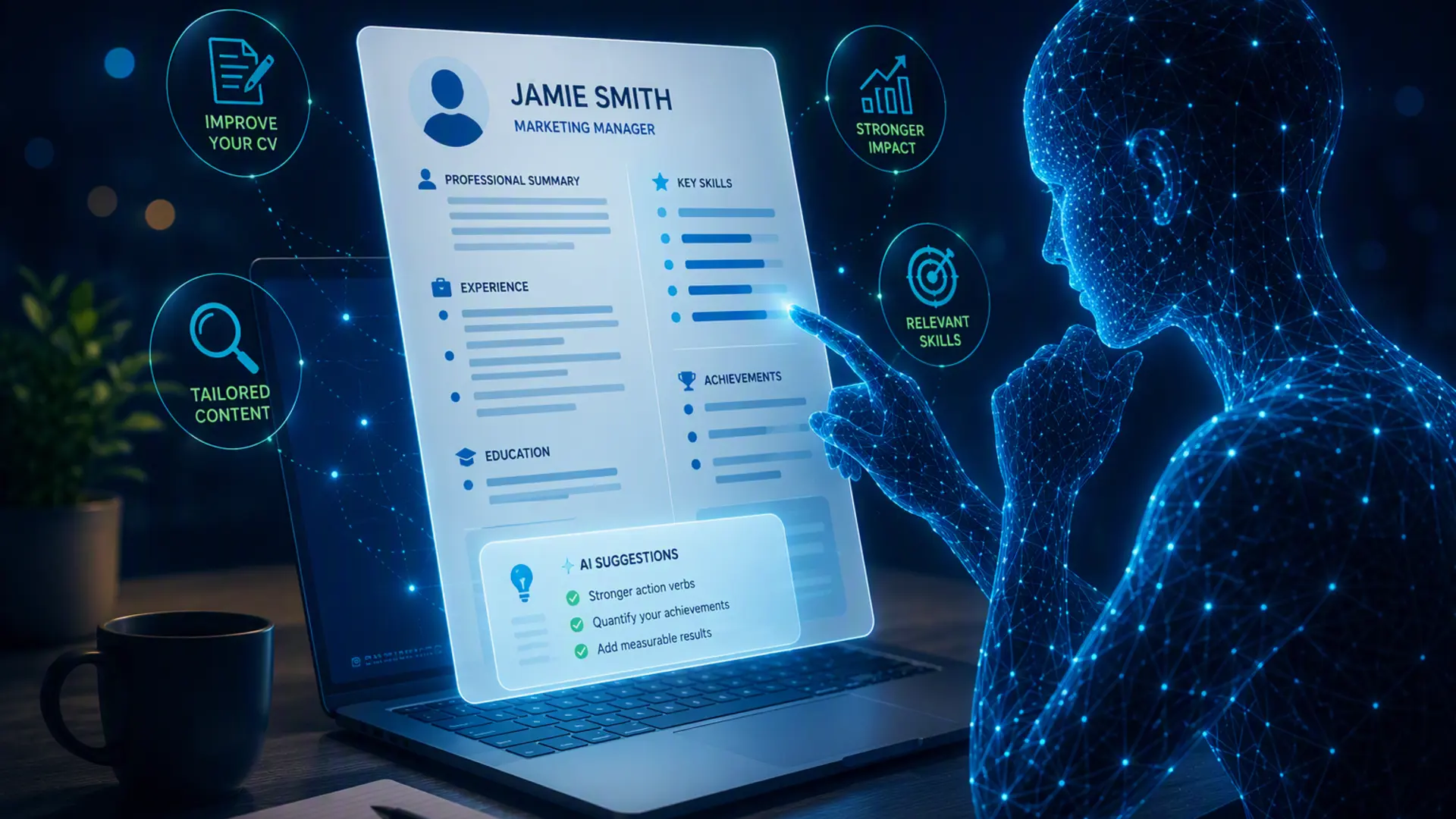
If your CV feels a bit dated, AI can help you structure it better, improve the formatting and suggest stronger ways of describing your achievements. It can help turn a good CV into a more polished one without changing the facts.
Interview preparation is another area where AI can be incredibly useful. You can use it to practise difficult questions, refine your examples and challenge yourself with follow-up questions you may not have considered. Think of it as a free interview coach that’s available whenever you need it.
Researching employers can also become much quicker. Instead of spending hours jumping between websites, AI can help summarise company information, recent developments, competitors and industry trends. That means you can walk into interviews feeling informed, prepared and confident.
Where People Get It Wrong
This is where things can start to unravel.
It’s tempting to let AI do all the heavy lifting, especially when you’re busy. But relying on it too much can actually hurt your chances.
One of the biggest mistakes people make is using AI to write an entire cover letter from scratch. The result is usually polished and well-written, but it often sounds generic.
Employers don’t want to hear why AI thinks you’re a good fit. They want to understand why you want the job.
A strong cover letter should reflect your motivations, your personality and your reasons for applying. AI can help improve the wording, but it shouldn’t replace your voice.
The same applies to interviews.
Using AI to generate answers during a live interview might sound like a clever shortcut, but it’s a risky one. Recruiters and hiring managers are becoming increasingly familiar with AI-generated responses and can often spot them very quickly.
Overly polished answers, corporate buzzwords, awkward pauses and responses that don’t quite sound natural can all raise alarm bells.
Trust is one of the most important factors in any hiring decision. If an interviewer feels you’re relying on AI instead of engaging with them directly, you’ve immediately put that trust at risk.
Don’t Try to Be Something You’re Not
AI can help you present your experience better.
What it can’t do is create experience that doesn’t exist.
If your CV suddenly claims expertise in systems you’ve never used, leadership responsibilities you’ve never held or skills you don’t actually possess, those gaps will quickly become obvious during an interview.
Most interviewers know how to look beyond the headlines and explore the detail behind what’s written on a CV.
Remember, employers aren’t looking for perfect people. They’re looking for people who can do the job, have the right attitude and show potential for growth.
Being honest about your strengths and development areas will always serve you better than exaggerating your experience and being caught out later.
Your Personality Is What Makes You Stand Out
Here’s something many people overlook.
As AI becomes more common, applications are starting to sound remarkably similar.
The people who stand out aren’t always those with the most polished CVs or the most sophisticated cover letters. They’re the people who sound genuine.
Your experiences, career journey, ambitions and personality are unique. That’s what helps create a connection with an employer.
No AI tool can genuinely replicate your enthusiasm for a role, explain why a particular opportunity excites you or tell your career story in the same way that you can.
Those personal elements are often what make the difference.
Let AI Support Your Decisions, Not Make Them
AI is great at providing information.
It can help you compare opportunities, explore salary expectations, understand job markets and identify potential career paths.
What it can’t do is decide what’s right for you.
Only you know what matters most in your career and your life.
Should you accept a new role?
Should you stay where you are?
Should you prioritise career progression over salary?
Should you make a complete career change?
AI can help you evaluate the options, but the final decision should always be yours.
The Bottom Line
AI is one of the most useful job search tools available today, and when it’s used well it can give you a genuine advantage.
Use it to improve your CV.
Use it to practise interviews.
Use it to research employers and explore opportunities.
Just don’t let it replace your personality, your judgement or your voice.
At the end of the day, employers aren’t hiring an AI tool. They’re hiring you. And in a world where more applications are starting to sound the same, being genuinely yourself may be the thing that sets you apart.
Register Your CV